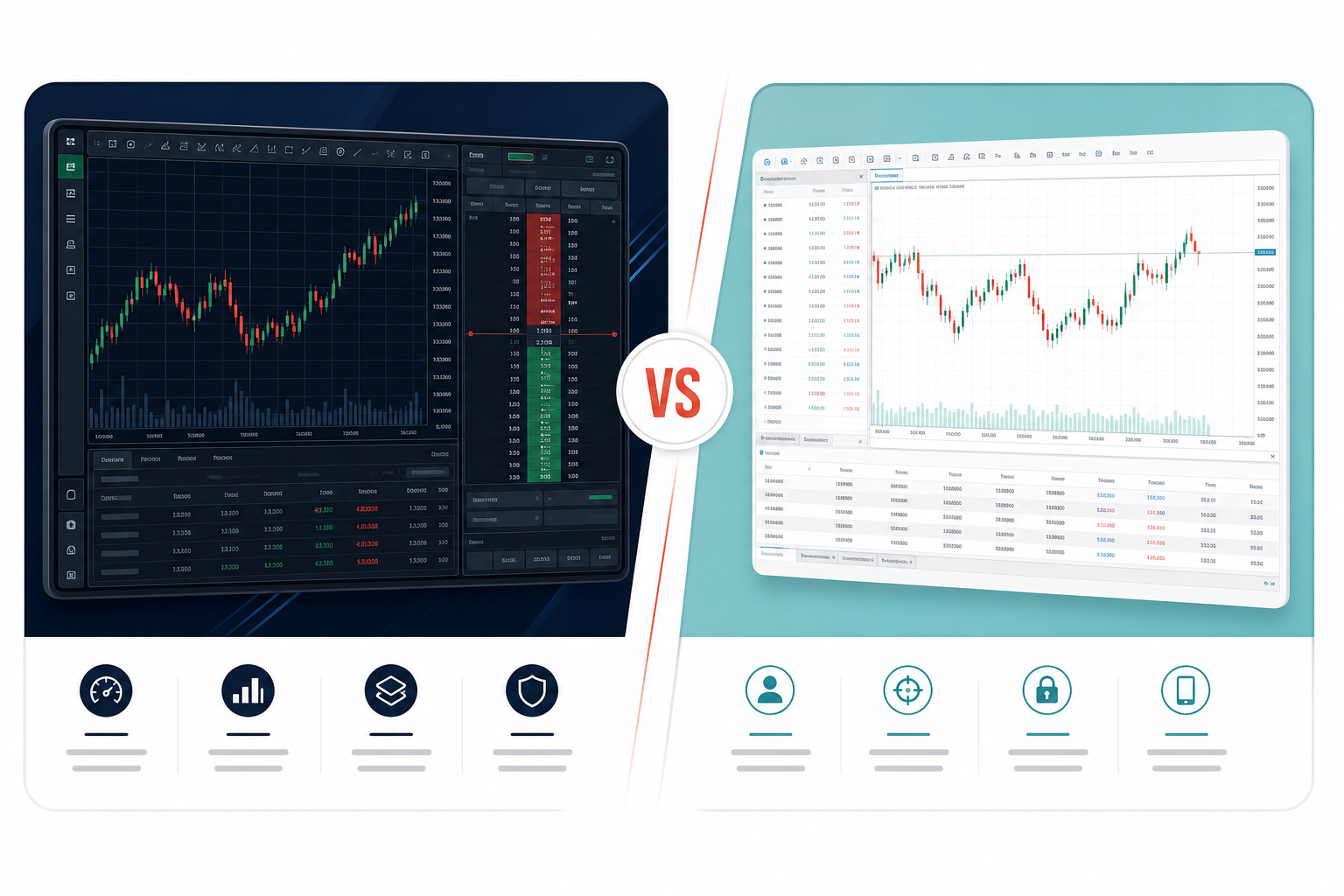
Compare
FxPro vs Exness
Japan resident guide · July 2026
This is not a simple ‘which broker is better?’ contest. Neither is a Japanese FSA-registered domestic broker. The useful comparison starts with the entity available to you, then compares a specific currency pair, account type, platform and payment route.
75%+ of retail investor accounts lose money when trading CFDs.
Compare
FxPro vs Exness

FxPro
Japan residents

Regulation
Japan residents
FxPro is notable here because it offers native cTrader alongside MT4, MT5 and Edge. Exness is often compared for lower practical entry points and flexible leverage messaging. That does not make either universally better: a cTrader user and a trader who simply wants a small initial funding requirement are solving different problems.
For FxPro Raw+, add roughly USD 3.50 per side per standard lot to the displayed spread. Standard has no fixed Wallet minimum, although a method can be around USD 100; Raw+ is about USD 1,000. Check Exness’s live account and entity terms separately rather than treating an old comparison table as a contract.
FxPro can show approximately 1:30 under CySEC/FCA retail conditions and up to 1:500 on an SCB route. Exness leverage is also entity- and account-dependent. A high maximum reduces opening margin, not the cash loss from a large position. Compare the margin estimate on the actual instrument, not only the headline ratio.
Use the same time window, pair, lot size and holding period when looking at costs. Then check withdrawal methods in your own name, support language and the legal company on each application. Both are offshore choices for a Japan resident; neither should be judged as though it were a domestic FSA account.
Choose one pair, one order size, one session and one holding period before comparing the two firms. Otherwise a low entry requirement, a raw spread and a maximum-leverage claim end up in the same column even though they answer different questions. Keep a note of the entity shown in each onboarding flow.
FxPro's practical distinction is its cTrader option alongside MT4, MT5 and Edge. For Raw+, include roughly USD 3.50 per side per standard lot in the calculation. Exness terms should be read from its current account menu rather than assigned a permanent figure from a comparison page.
Test margin with the actual instrument, not a headline ratio. FxPro can show approximately 1:30 under FCA/CySEC retail conditions and up to 1:500 via an SCB route; the available conditions remain entity-specific. High leverage changes the margin required, not the cash loss on a move.
Neither choice is a domestic Japanese FSA account. Payment route, support record and the legal company deserve as much attention as a screenshot of the spread.
Do not transfer a balance merely because one comparison line looks better. Re-check the destination payment route, client agreement and instrument specification on the day of the move.
FxPro offers cTrader; always check the other broker’s current platform menu.
It depends on account type, spread, commission, timing and payment costs.
No.
Only after checking the entity and instrument for each account.
Compare the route and account requirements, not just a headline minimum.
FxPro is an overseas CFD broker offering FX, equity indices, commodities and more. Group companies operate under regulators including FCA (509956) and CySEC (078/07). It is not a Japan FSA-registered domestic FX firm for residents of Japan.